Find us on Facebook
Fort Hancock banner

Things to do

Exhibits: See the oldest lighthouse in America and the exhibits on New Jersey Lighthouses in the Lighthouse Keeper's Quarters.

Visit the Fort Hancock Museum to see exhibits illuminating the past of this historic district of Sandy Hook.

Activities: Catch a great view of New York Harbor and the distant Manhattan skyline from the Observation Deck next to Battery Peck.

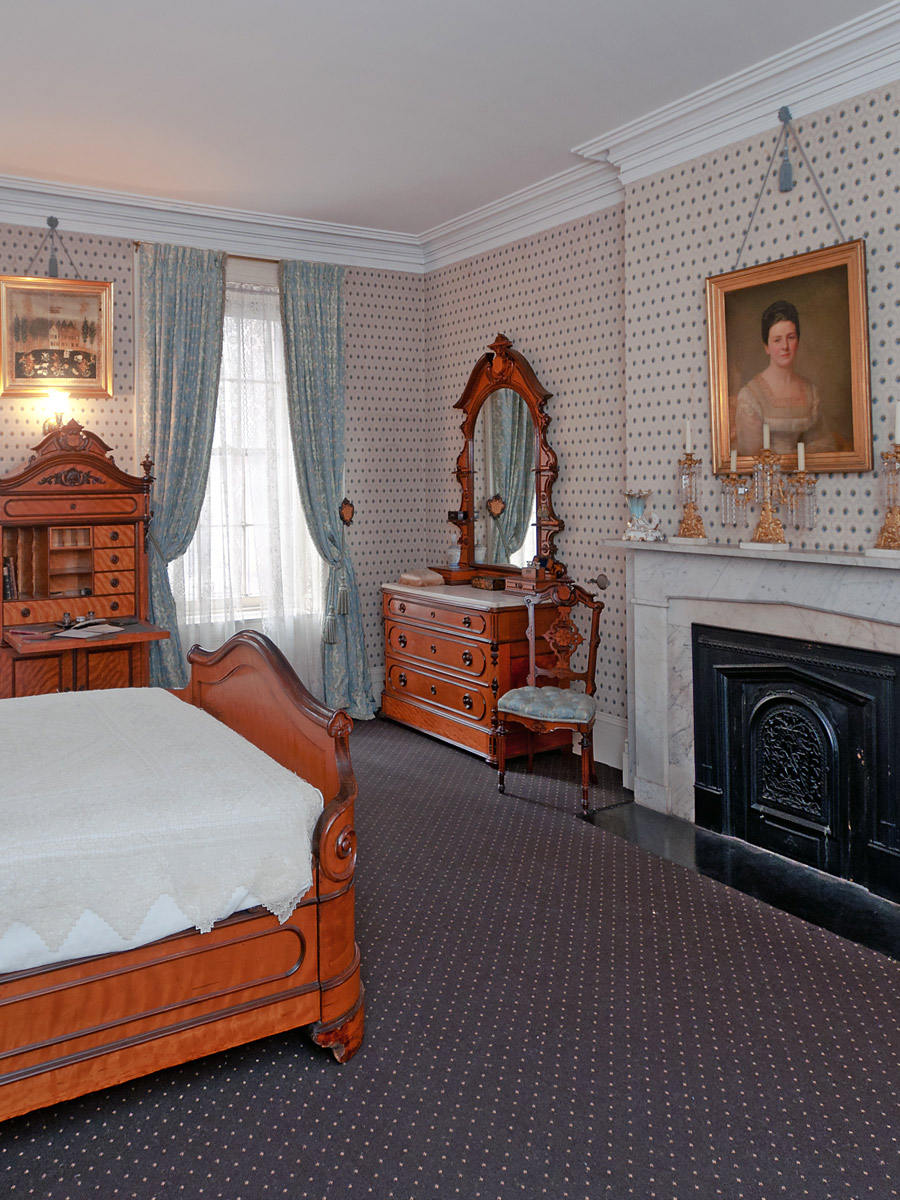
Experience the life of an army Lieutenant and his family during World War II at the fully restored History House.

Tours: Explore Battery Potter to get a glimpse of what harbor defense was all about.

Visitor information

Gateway Nat'l Recreation Area
National Park Service
732-872-5970

HOURS

Dawn-dusk.

ACCESSIBILITY

Accessible restrooms are available at all Beach Centers and at Guardian Park in Fort Hancock. The North Beach Observation Deck and Lighthouse Keeper's Quarters are both accessible. All parking lots have handicapped spaces available.

LOCATION

Monmouth County, New Jersey.

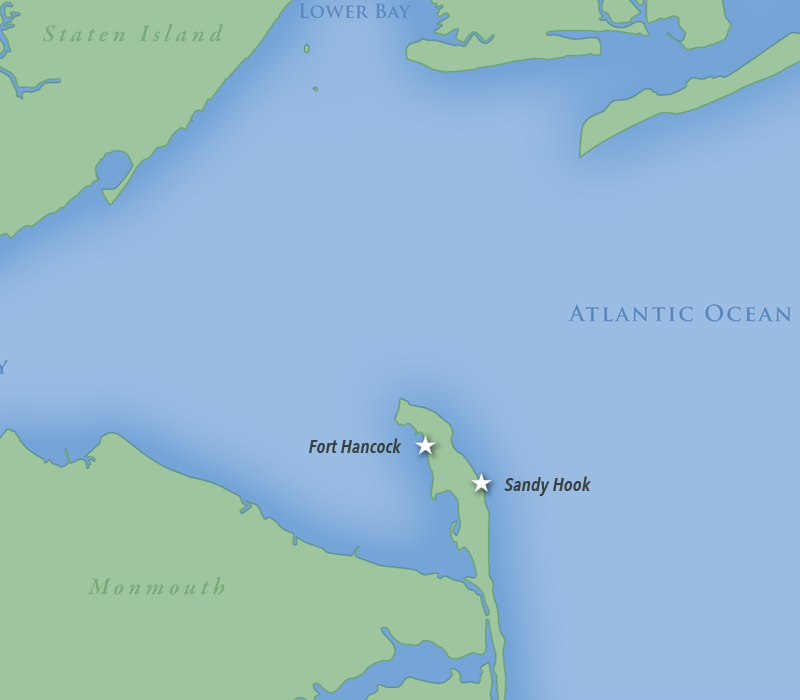
Map

Nearby attractions

Sandy Hook

National Park Service arrowhead

Fort Hancock

A historic fort at Sandy Hook, New Jersey

Fort Hancock at Sandy Hook -- part of Gateway National Recreation Area -- provided coastal defense for New York Harbor from 1895 until 1974. During the height of the Cold War, the fort housed Nike missiles prepared to intercept jet warplanes threatening New York City. Just a quick trip from Manhattan by ferry, the historic district of Sandy Hook is open for the public to explore. Today, over 100 buildings and fortifications remain, and the Fort Hancock Museum tells the story of this long-term military installation. Take a break from a day at the beach and hop on one of the Sandy Hook trolley buses to Fort Hancock for a trip back in time to the heyday of the harbor's coastal defense.

Fort Hancock is also home to the nation's oldest continuously operated lighthouse. Fully restored and open to visitors, the Sandy Hook Lighthouse has been guiding ships into New York Harbor since 1764. Due to its strategic location, the lighthouse was defended by British loyalists to ensure the safe passage of British ships into New York City during the American Revolution.

The first of the many concrete gun batteries at Fort Hancock was constructed as early as 1890. Designed to be invisible from the sea, the gun batteries have housed a wide range of artillery over the years. The first guns had only the limited range of 7 miles, but by 1919 artillery range increased to 20 miles. The Mortar Battery included an extensive tunnel system meant for storage of guns and ammunition. During World War II, the tunnels were converted into a top secret command center for defense of New York. One of the oldest gun batteries, Battery Potter, is open to visitors through ranger led tours.

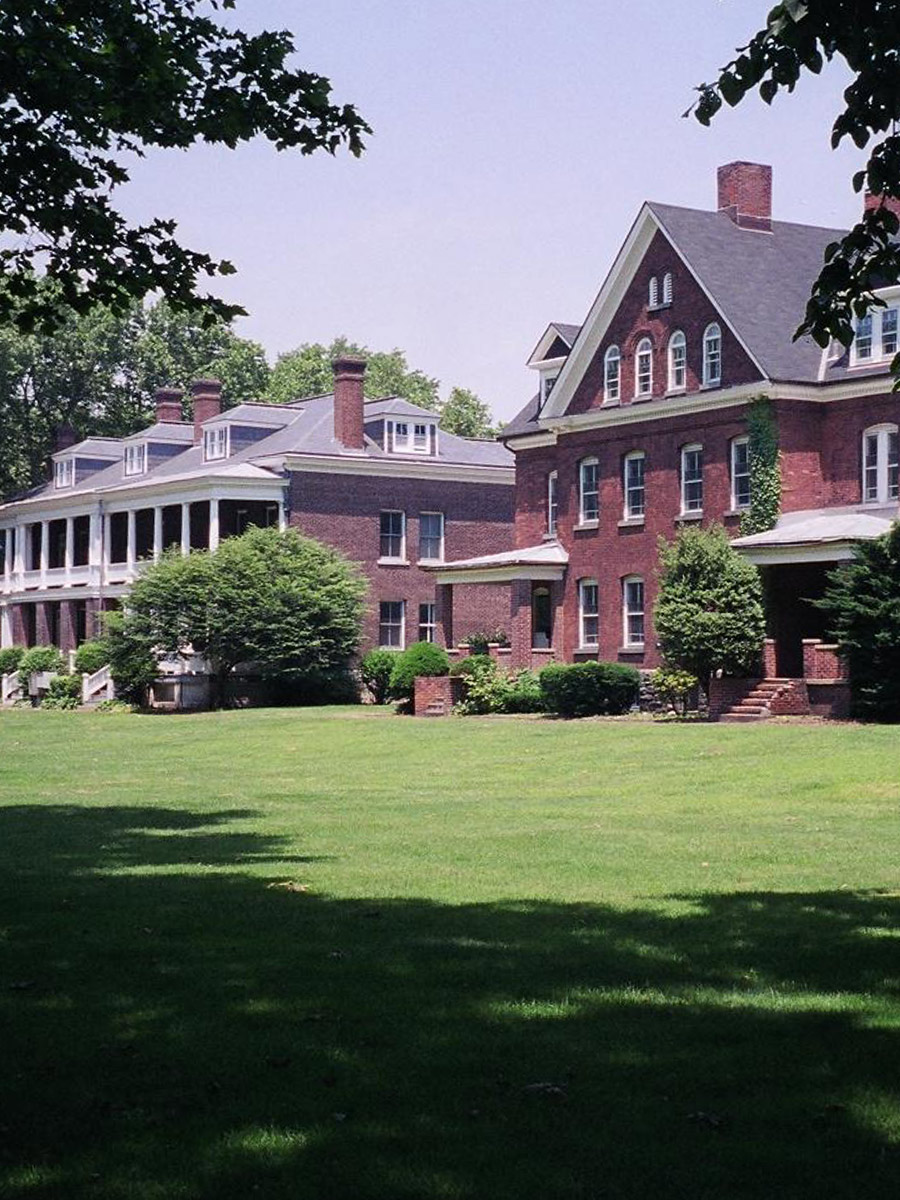
The buildings that are still on view today include historic gun batteries, a renovated chapel, homes for the enlisted men and officers, a YMCA building, and the former post movie house which is now used for music and live theater. These historic structures, while not open to the public, offer a dramatic foil to the beaches and surf available at Sandy Hook.


Lighthouse

The historic Sandy Hook Lighthouse has been guiding ships into the harbor since the 1700's. Visitors today can tour the lighthouse museum or join one of the scheduled walks to the top of the tower.

Officer's Row

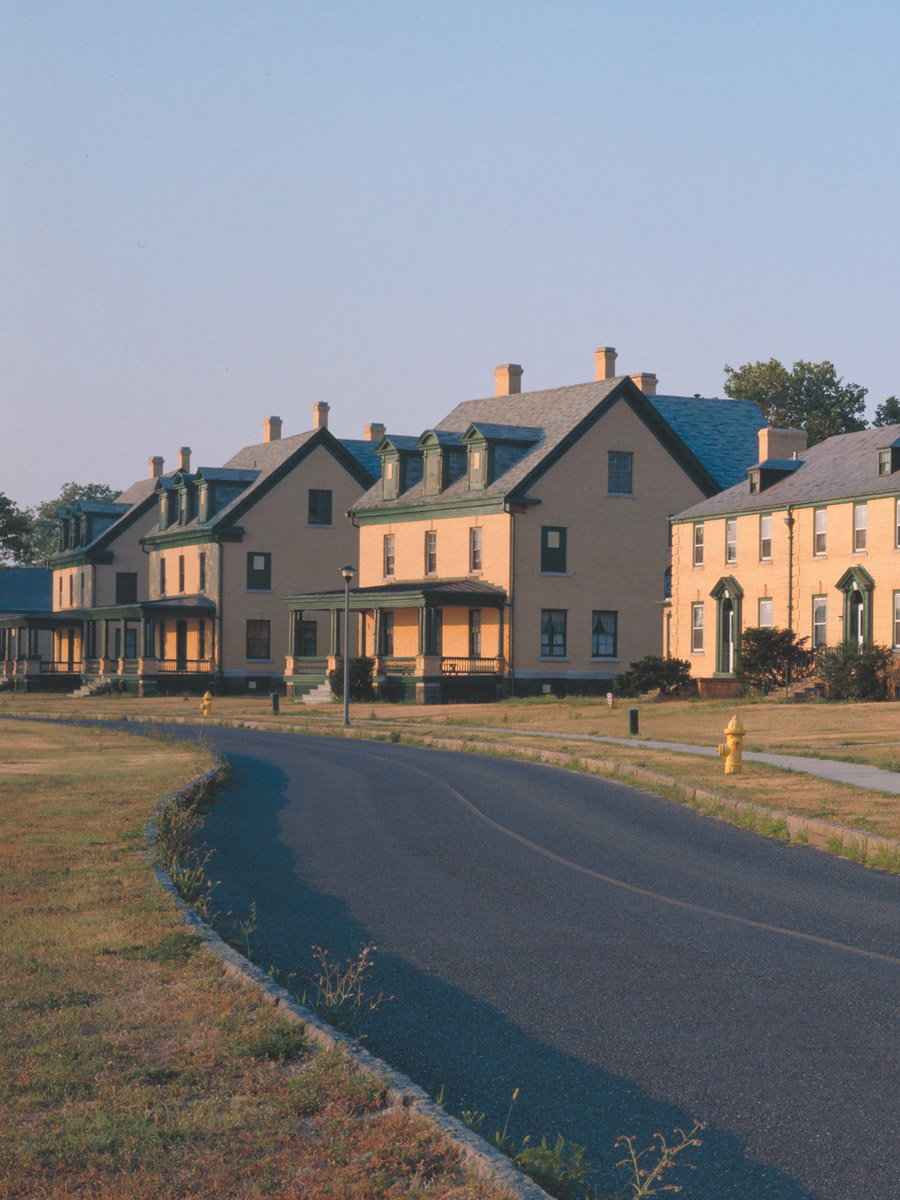
Officer's Row at Fort Hancock, conceived and designed by Captain Arthur Murray, was described by him as simple homes not "lacking in beauty." With views of the bay, the Colonial Revival houses give the fort a unique small town feel.